Sustainable resource practices for a practical industrial supply chain.
Aryavarta's sustainability position is grounded in what an industrial resource company can actually influence: smarter sourcing, lower waste, better recovery, safer handling, documented movement, and quality management discipline.
Circular economy
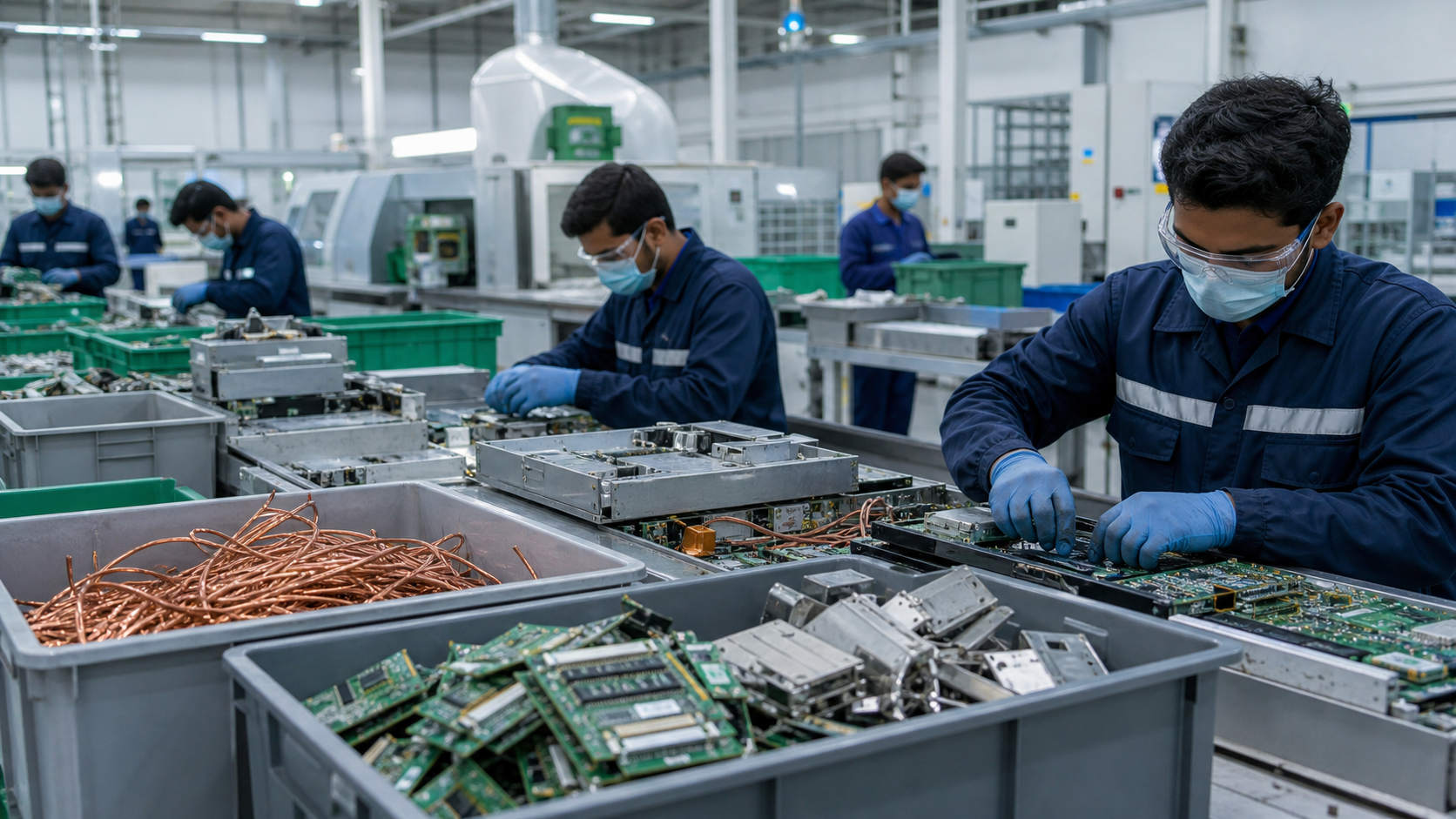
E-waste recovery and material circularity.
Industrial e-waste and obsolete components often contain recoverable metals, reusable parts, and recyclable material streams. Aryavarta's circular-economy service is designed to help customers move away from unmanaged disposal toward documented recovery and responsible routing.
- Collection planning for electronics, industrial components, and metal-bearing scrap streams.
- Segregation support to separate recoverable, reusable, recyclable, and disposal-bound material.
- Coordination with recovery partners for metals, components, and compliant handling.
- Documentation support for internal audits, customer reviews, and sustainability reporting.
Zero-waste industrial practices
From good intent to operating routines.
Zero-waste is not presented as a decorative claim. The site describes practical routines Aryavarta can support across procurement, storage, freight, and recovery.
Map Waste Streams
Identify process scrap, obsolete spares, packaging, rejected material, and electronics categories.
Classify Material
Separate reusable, recoverable, recyclable, returnable, and disposal-bound streams.
Route Responsibly
Move materials through appropriate vendors, recovery partners, or warehouse channels.
Record Movement
Maintain movement records, dispatch details, receipts, and closure evidence.
Review Recovery
Assess recovery value, disposal reduction, and operational improvement opportunities.
Improve Procurement
Use waste data to improve sourcing, packaging, spare stocking, and supplier selection.
Certification roadmap
Quality and environmental systems in progress.
The compliance page clearly marks ISO certifications as in process. This sustainability page explains why they matter to customers and how they connect to operational behavior.
ISO 9001:2025 Quality Management
Quality routines support consistent service delivery, supplier evaluation, complaint handling, corrective action, customer feedback, and documented process control.
- Defined operating procedures
- Supplier performance review
- Non-conformance tracking
- Customer satisfaction monitoring
ISO 14001 Environmental Management
Environmental routines support waste identification, resource efficiency, compliant disposal, impact assessment, and continual improvement practices.
- Waste-stream mapping
- Recovery partner controls
- Environmental objective tracking
- Documentation for audit readiness

Supply-chain efficiency
Sustainability also means fewer avoidable inefficiencies.
For an industrial aggregator, environmental responsibility is closely linked to operational efficiency. Better stock planning reduces emergency freight. Better documentation reduces repeated movement. Better vendor selection reduces rejection and rework.
Customer reporting
Records that make sustainability visible.
Aryavarta can support customers with document sets that make circular-economy and zero-waste efforts easier to review internally.